Navigating the Skies: The Controversies Surrounding President Trump’s Aircraft Choices
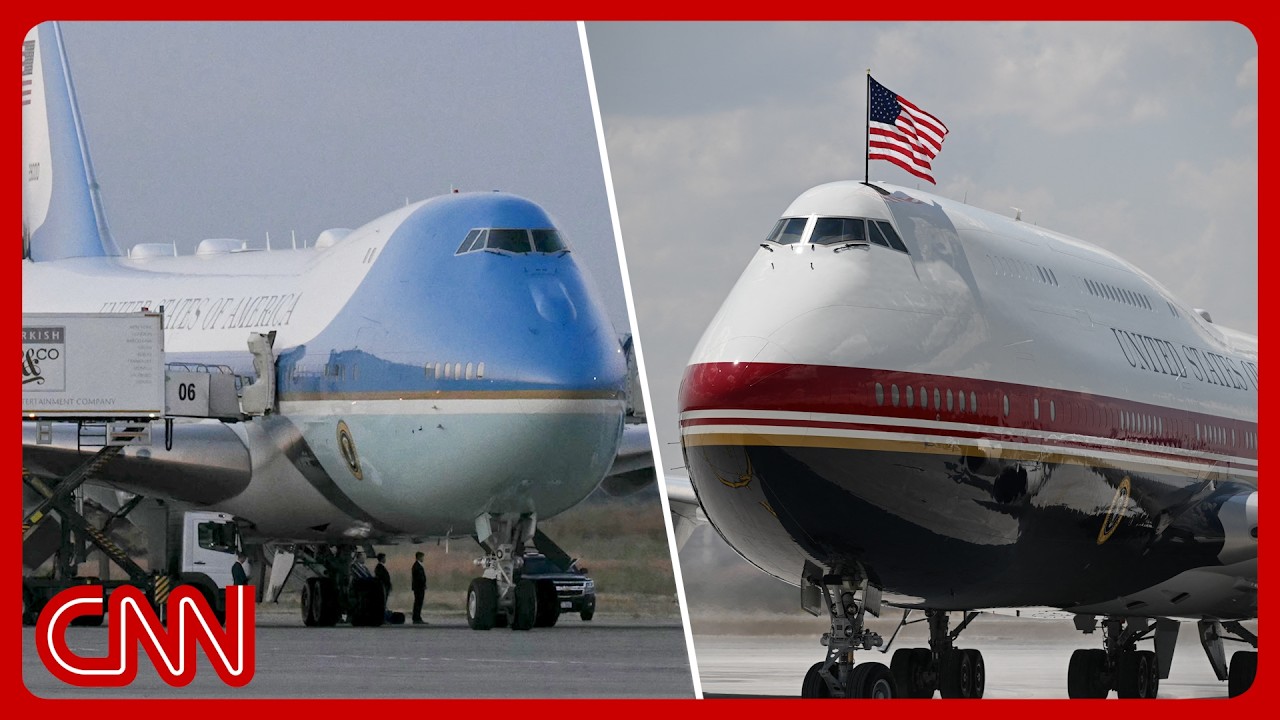
President Donald Trump has made headlines not only for his policies but also for his fervent admiration of a new jumbo jet gifted to him by the Qatari government. This aircraft, boasting a modern red, white, and blue color scheme, has captured the president’s enthusiasm. However, recent decisions regarding his choice of aircraft during international travel have raised eyebrows, particularly after he opted to return from a NATO summit in Turkey aboard the older model of Air Force One. This puzzling decision has sparked questions from reporters and security experts alike.
The administration’s explanation for this aircraft switch centers around a desire to showcase the new plane to U.S. military personnel. Trump expressed that the new jet was sent to a military base in the United Kingdom for the sole purpose of allowing members of the Armed Forces to tour the aircraft and gain insight into its capabilities. However, when asked about the timing of his switch back to the older Air Force One, Trump ventured into the realm of security concerns. He acknowledged that the role of the president is perilous, humorously suggesting that “maybe [he] wouldn’t have run” for office had he fully understood the risks involved.
The New York Times reported that the decision to switch aircraft was influenced by heightened security concerns surrounding Iran, particularly amid escalating tensions related to potential threats against the president’s life. Mark Kenshin, a retired Marine Corps colonel overseeing the Air Force One replacement program, noted that the "bridge plane," effectively a temporary version of Air Force One, lacks many of the advanced security features that characterize the traditional aircraft.
This raises significant questions about the safety protocols that determine the aircraft used for presidential travel. The Secret Service conducts comprehensive assessments of threats based on the president’s itinerary, adjusting aircraft choices accordingly. While the initial decision for Trump to fly on the new Qatari jet may have been made with confidence—reflecting a relative peace during his Turkey visit—emerging hostilities may have necessitated a shift back to a more capable aircraft.
The differences in security features between the older and newer aircraft are stark. The traditional Air Force One, with its baby blue exterior, was custom-built with fail-safes for various threats, including missile attacks and electronic disruptions from potential nuclear warfare. It is equipped with advanced communication systems to ensure that presidential decision-making can occur uninterrupted, even in crisis situations. In contrast, the newer aircraft, hastily converted for presidential use, lacks many of the necessary security assurances, including missile detection and countermeasures.
This raises pertinent questions about how operational decisions are made regarding the aircraft. Jonathan Wacker, a former Secret Service agent, indicated that the safest aircraft isn’t defined merely by its luxury or modernity but by its ability to respond effectively to the specific threat environment of the moment. The decision to revert to Air Force One reflects a strategic imperative based on intelligence assessments and operational readiness rather than optics or preference.
The various explanations offered by the administration have not assuaged the lingering concerns regarding the safety of the president during international travel. For example, inconsistencies emerged from reports suggesting that the White House instructed reporters to keep windows closed during the return flight, a protective measure implying a heightened risk level. Documents and advice surrounding the operational environments diplomats and military personnel now find themselves in call for thorough scrutiny.
Ultimately, the debate surrounding President Trump’s choice of aircraft—punctuated by the contrasting characteristics of the new jet and the traditional Air Force One—sheds light on the complexities of presidential security logistics. As tensions fluctuate with global adversaries, the implications of such decisions may require further examination, highlighting the ongoing balancing act between presidential safety and the potential optics of travel. Only time will clarify whether this will become afootnote in a broader discussion about national security or a salient issue as threats evolve on the geopolitical stage.